Avoid Awkward Greetings Around the World | B2 English Listening
Ever Felt Awkward Saying Hello in Another Country?
Welcome back to the Peach Teach English Podcast! In this episode, we explore a topic that every English learner — and traveler — deals with sooner or later: how to greet people in different cultures without causing confusion or discomfort.
If you’ve ever gone for a handshake while someone leaned in for a kiss… or bowed when a hug was expected… you’re not alone. Greetings aren’t just words — they’re full of unspoken rules that vary across the world.
Together, we’ll look at real-world greeting customs from places like Japan, Brazil, the U.S., and more. You’ll hear some of my own embarrassing cross-cultural moments (yes, they involved kisses!), and learn how to avoid those same mistakes in your own life.
Whether you're working internationally, traveling, or just building deeper connections with people from around the world, this episode will help you understand how greetings really work — and how to feel confident in any situation.
This episode + transcript is perfect for B1–B2 English learners who want to improve listening skills, build cultural awareness, and communicate with respect across cultures.
Subscribe to Get Weekly Podcast Updates
Watch & Listen to the Peach Teach English Podcast:
📝 Episode 46 Transcript:
00:00 – Intro: The Importance of Cultural Greetings
Have you ever arrived at a meeting on time, greeted everyone politely, and still felt like something was off?
I’ve lived abroad, worked with bosses from Brazil, Turkey, the UK, and more. I’ve coached non-native English speakers from all over the world, and what I’ve learned is this: a lot of miscommunication isn’t about bad English; it’s about unspoken cultural rules.
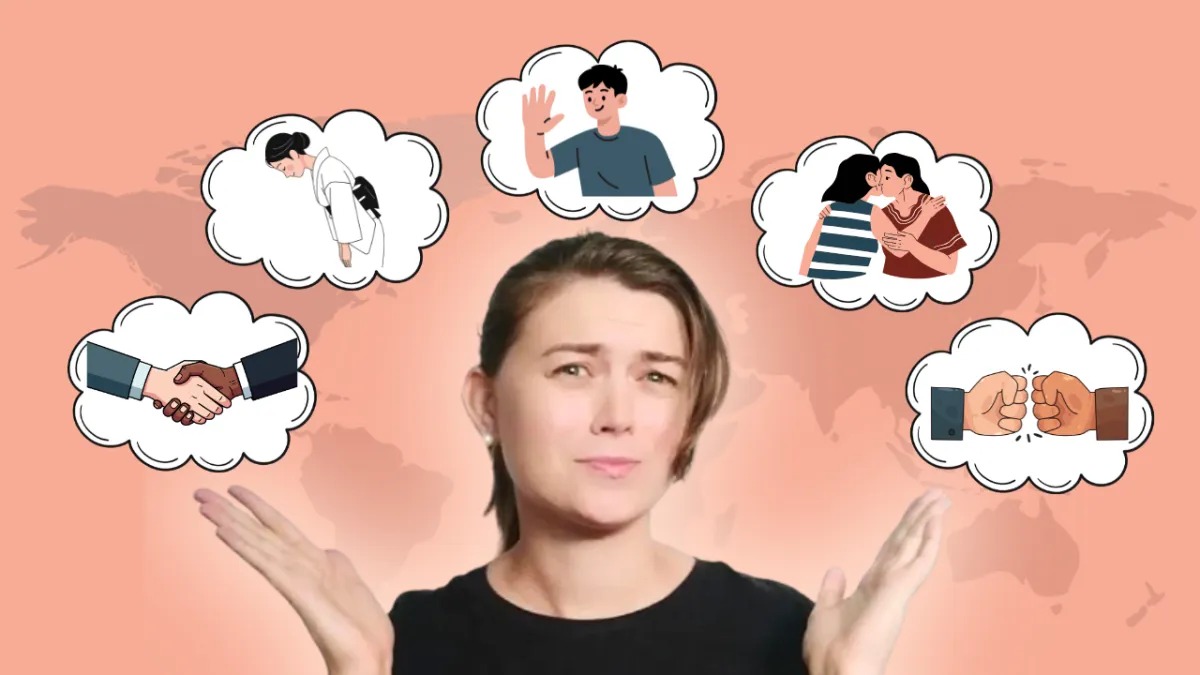
In this episode, we’re going to walk through how people greet each other across cultures, from professional handshakes and bowing to no-contact gestures, kissing and hugs, and very informal greetings, so you can avoid awkward moments and feel more confident and respectful when meeting people from different backgrounds.
00:51 – Personal Story: I Kissed My Friend!
Before we dive into the different greetings, I wanna share one of my own stories when cross-cultural communication went wrong.
I live in Colombia, and here it’s very common to greet people with a hug and a kiss on the cheek, especially people you know well. After a while, this just becomes normal. You stop thinking about it. It becomes a habit.
So after living here for some time, I went back to the United States. I ran into an old friend. I was happy to see him, and without thinking, I kissed him on the cheek, and he was like,
“Whoa, what was that?”
And he was very surprised.
And I said,
“Oh my gosh, I’m so sorry. It’s just a habit now.”
And we laughed, but that moment has stuck with me because this is how cultural habits work. When you spend enough time in a culture, the way people greet each other starts to feel automatic. But the reality is that this can vary so much from culture to culture.
In social situations, it can be funny, but in professional situations, the same misunderstanding can feel awkward and possibly even disrespectful.
Now we’re gonna look at common gestures used around the world for greetings. But first, I want to recommend that you check out the transcript for this episode using the link in the description or clicking this QR code. Now, let’s go ahead and get back to the greetings.
02:34 – Number 1: Handshakes
Number one is the handshake.
So let’s start with the most common greeting gesture for professional settings, or when you’re meeting someone new for the first time: the handshake.
In international business, the handshake works because it communicates professionalism, respect, and clear boundaries without being too personal. This is why handshakes are common in places like the United States, the United Kingdom, and Australia, and why they’re also widely used across much of Europe and Latin America in business contexts.
In many cultures, a handshake is expected at the beginning of a first meeting, and sometimes again at the end. However, even when the gesture is the same, the style can vary.
Grip strength, eye contact, and how long the handshake lasts can all change the message you send. In some places, handshakes are firm and brief, and in others, they’re lighter, longer, or more relaxed.
In parts of the Middle East and South Asia, for example, handshakes may last longer, and it’s important to remember that the right hand is used, since the left hand can be considered inappropriate in some cultural or religious traditions.
It’s also important to be aware of gender-related cultural norms to avoid causing discomfort or offense. In some African cultures, handshakes may include additional steps or small variations that signal friendliness and respect.
So while the handshake works as a global business default, it’s not a one-size-fits-all gesture.
When possible, do a little research, observe how others greet each other, and always show respect for the local culture you’re in.
04:36 – Number 2: Bowing
Number two is bowing. In some cultures, greetings focus less on physical contact and more on showing respect through posture or body movement. Bowing plays an important role in countries like Japan and South Korea, especially in formal or professional settings. Here, bowing communicates respect, awareness of hierarchy, and politeness.
Similar respect-based greetings exist in other parts of the world. In Thailand, people often combine their slight bow with the hands pressed together. In India, the Namaste gesture serves a similar purpose and is often used to show respect and politeness. Variations of these gestures also exist in places like Cambodia and Malaysia.
Even though these greetings may look similar, their meaning and level of formality can differ significantly from country to country. That’s why it’s important not to assume they are interchangeable and to take time to learn what’s appropriate in each context. If you work closely with people from these cultures, be sure to research the specific norms and observe what others do first.
05:54 – Number 3: No-Touch Gestures
So number three is no-touch gestures. Sometimes the most respectful choice is not using physical contact at all. No-touch greetings include a polite, verbal greeting with a friendly smile, a small nod, a subtle wave, or even briefly raising your eyebrows to acknowledge someone. This is usually more familiar or informal.
These gestures are very common in international workplaces, formal environments, and situations where you’re unsure about cultural expectations. No-touch greetings are especially useful in first meetings, in multicultural teams, and when there are religious or personal boundaries.
A simple “hello” or “nice to meet you,” combined with a nod or a smile, can communicate professionalism and respect without any risk of crossing boundaries. Sometimes doing less is the most polite choice.
07:00 – Number 4: Kissing and Hugging
Number four is kissing and hugging. Before we talk about rules, I wanna start with a real moment because this greeting can be very embarrassing if you get it wrong. I come from a non-kissing culture, so even after living abroad for years, this still doesn’t feel completely natural to me.
There have been times when I went in for a hug and a kiss on the cheek. The other person went in for a kiss, too. We moved in the same direction, and we almost kissed on the lips. Extremely awkward. And I’ll be honest, this has happened more than once, and that’s why this greeting matters. When kissing is part of a culture, getting it wrong isn’t just uncomfortable. It can be embarrassing for both people.
So, how does kissing as a greeting usually work? In many cultures, a kiss on the cheek is not romantic. It’s simply a way to show warmth and friendliness. However, one of the biggest differences is how many kisses people expect, and this is where confusion starts.
One kiss. In some places, greeting with one kiss is common.
This can be seen in parts of Latin America, including countries like Colombia and Argentina, and in some other regions around the world. The kiss is usually light, cheek to cheek, and very quick.
Two kisses. In many other cultures, two kisses are the norm. This is common in parts of Southern Europe, such as Spain and Portugal, as well as in Brazil and some other regions.
Usually, people alternate cheeks, but even this can vary.
And three or more kisses. In some places, people go for three kisses or even more. This can happen in certain parts of France and Belgium, and the exact number can change by region, city, or even family. This is why trying to memorize rules often doesn’t work.
So be sure to observe, and don’t be afraid to ask for advice.
When is kissing appropriate, and when is it not? Kissing is much more common in social settings with friends, family, or people you already know well. In professional settings, especially during first meetings, kissing is usually less common, even in cultures where it exists socially.
Many workplaces still prefer a handshake or a verbal greeting. Kissing often appears later once relationships are established, and even then, it depends on company culture and personal comfort.
The rule that saves you. So, here’s the most important rule: don’t initiate. Let the locals lead. If someone leans in for a kiss, you can follow.
If they don’t, a handshake or verbal greeting is always safe. Observing and adapting is far more respectful than guessing.
Kissing and hugging as greetings can feel warm and friendly, but they’re also some of the easiest gestures to misread. Even people who live abroad for years, like me, get this wrong sometimes, and that’s okay.
What matters isn’t perfection. It’s awareness, humility, and the willingness to adapt.
Just so you know, I’m a big hugger. Some people have said I give the best hugs, so if you ever meet me one day, I’m totally open to a friendly hug.
10:50 – Number 5: Casual and Friendly Gestures
Finally, number five: very informal greetings.
These are gestures like fist bumps, bro hugs, high fives, or even secret handshakes. These gestures signal friendship and equality, comfort, and inside status. They’re common among colleagues, friends, or very casual environments, but they’re rarely appropriate for first meetings or formal situations. If you see these gestures, it usually means a really close relationship already exists.
11:26 – Conclusion: Final Greeting Tips
So what’s the real skill in cross-cultural greetings? It’s not memorizing every gesture. It’s starting more formal, observing carefully, and adjusting slowly. If you’re ever unsure, choose the safer option. Watch how others interact and follow their lead.
And now I’d love to hear from you. In your culture, how do people greet each other in formal situations compared to informal ones?
Share it in the comments. Your experience helps everyone build better cross-cultural awareness.
And if you want to review today’s vocabulary and ideas, don’t forget you can access the full transcript and study guide using the link below or the QR code. It’s a great way to check your understanding and really master cultural greetings around the world.
Thanks for listening to the Peach Teach English Podcast. I’m Frankie Mesmer, your host, and this space is dedicated to taking you from B1 English to B2 English fluency and beyond.
Be sure to hit that like button if you enjoyed this episode. Subscribe so you don’t miss the next one, and I’ll see you in the next episode.
🌍 Cross-Cultural Communication Vocabulary Guide
The following vocabulary was used in this episode. These words and expressions are commonly used when talking about cross-cultural communication, greetings, professional behavior, and cultural challenges. They will help you communicate more confidently and respectfully in international and multicultural situations as you work toward B2 English fluency.
🤝 Greetings & Gestures
To greet someone – To say hello or welcome someone
Handshakes – A greeting where two people hold and shake hands, often in professional situations
Bowing – A greeting that shows respect by bending the upper body forward
Gestures – Movements of the body or hands used to communicate meaning
Verbal greeting – A greeting using spoken words, such as “hello” or “nice to meet you”
Smile – A friendly facial expression used to show warmth or politeness
Nod – A small up-and-down movement of the head to show agreement or acknowledgment
Wave – A hand movement used to greet or say goodbye
Fist bump – A casual greeting where two people touch fists
Bro hug – A very informal hug, usually between friends
High five – A greeting where two people raise their hands and slap palms together
Secret handshake – A special greeting shared by people in the same group
Eye contact – Looking directly into someone’s eyes while communicating
Grip strength – How firmly someone holds your hand during a handshake
Posture – The way you hold or position your body
⚠️ Communication Problems & Mistakes
Miscommunication – A situation where people do not understand each other correctly
Misunderstanding – An incorrect interpretation of what someone says or does
Awkward moment – An uncomfortable or embarrassing situation
To get something wrong – To make a mistake or do something incorrectly
To misread – To understand a situation or signal incorrectly
To cross boundaries – To do something that makes others uncomfortable or breaks social limits
Inappropriate – Not suitable or acceptable for a situation
🧠 Learning & Awareness
Cultural norms – Common behaviors and expectations in a culture
Hierarchy – A system where people are ranked by position or authority
Cultural awareness – Understanding and recognizing cultural differences
Willingness to adapt – Being open to changing your behavior in new situations
To interact – To communicate or behave with other people
To follow someone’s lead – To copy what others do and let them guide the situation
To signal – To show or communicate something, often without words
To acknowledge someone – To show that you see or recognize another person
✨ Quick Tip: Greeting Across Cultures
Greetings may look simple, but they are one of the easiest places for miscommunication to happen in cross-cultural situations. These tips will help you greet people in a way that feels respectful, confident, and appropriate.

1. Do your research first
Before traveling, working with international teams, or meeting someone from a different culture, take a few minutes to learn about common greeting styles. This gives you a basic frame and helps you avoid obvious mistakes.
2. Start more formal than you think
In professional or first-meeting situations, it’s safer to begin with a verbal greeting or a handshake. You can always become more informal later, but starting too casually can feel inappropriate.
3. Observe before you act
Watch how others interact. Pay attention to eye contact, posture, gestures, and how close people stand. This helps you avoid an awkward moment and understand local norms.
4. Let locals lead
Don’t rush to hug, kiss, or touch. If you’re unsure, follow someone’s lead. This shows cultural awareness and a willingness to adapt.
5. Be careful with physical contact
Different cultures have different boundaries. A greeting that feels friendly in one place may feel disrespectful in another. When in doubt, less contact is usually safer.
6. Don’t be afraid to ask
Asking a polite question is often better than guessing. Most people appreciate the effort to be respectful.
7. Focus on respect, not perfection
Mistakes happen — even to experienced travelers and professionals. What matters most is being aware, respectful, and open to learning.
📚Resources & Tools Mentioned:
🚀Upgrade to the Fluency Community
Join for just $5/month and get access to the B1 to B2 interactive course with reading, listening, speaking, and writing activities—designed to help you reach B2 English fluency faster.
📱Connect with Frankie:
🍑👩🏼🏫 Peach Teach English Services:
🎯 Want to Reach B2 English Faster?
This episode is part of my B1 to B2 English Fluency Series. Each episode helps you expand your vocabulary, improve comprehension, and speak with more confidence.
👉Check out the full FREE B2 Study Guide
🚀Upgrade to the Fluency Community
Join for just $5/month and get access to the B1 to B2 interactive course with reading, listening, speaking, and writing activities—designed to help you reach B2 English fluency faster.